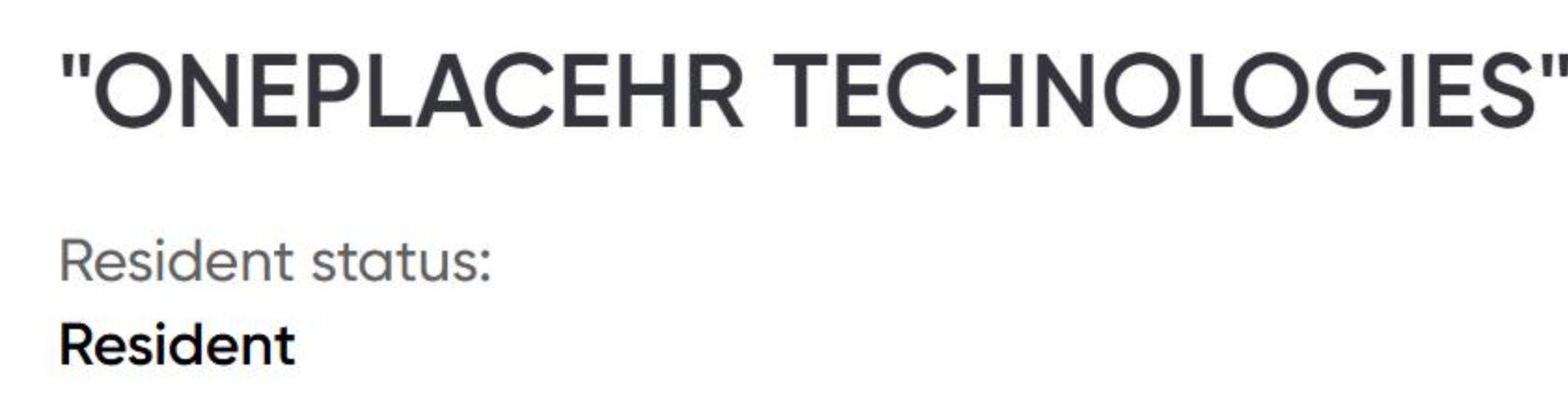
We managed to become a resident of IT Park Uzbekistan. It took effort — but we got there.
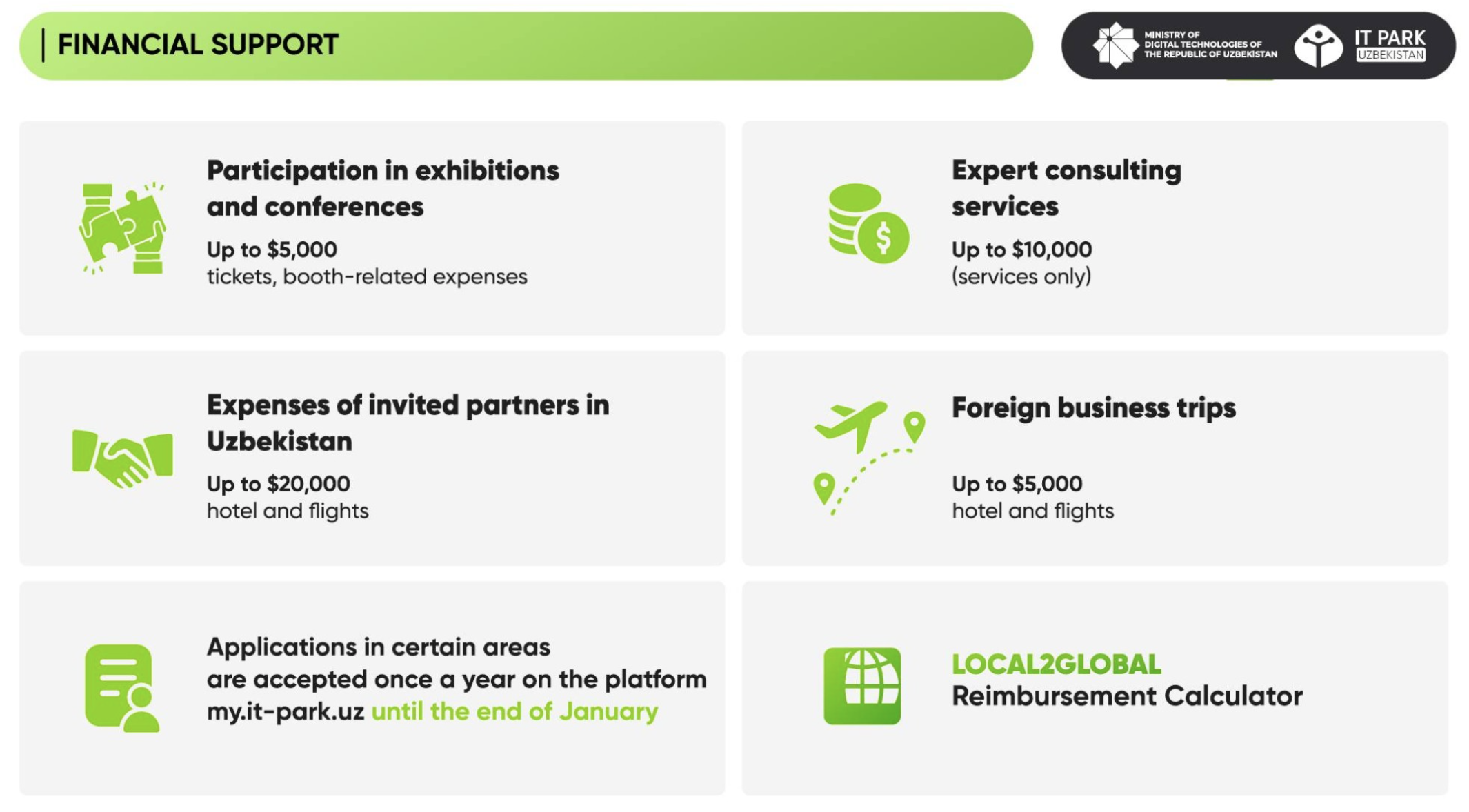
As a resident, OnePlaceHR Technologies pays zero tax on income generated through the park until 2040. Not a reduced rate. Zero. And on top of that, the park actively supports companies expanding internationally — covering expenses for foreign business trips, inviting partners to Uzbekistan, participation in global conferences.
I wish Mongolia had figured this out.
What IT Park Actually Does
Uzbekistan understood something most governments haven't: taxing a startup before it generates meaningful revenue doesn't produce tax income — it produces a dead startup. So they flipped the logic. Instead of extracting from early-stage companies, they invest in helping them reach foreign markets and bring currency back in.
Exhibitions & conferences
Up to $5,000
tickets, booth expenses
Expert consulting services
Up to $10,000
services only
Invited partners in Uzbekistan
Up to $20,000
hotel and flights
Foreign business trips
Up to $5,000
hotel and flights
This is not charity. It is infrastructure policy with a coherent theory behind it: help companies export, they bring dollars home, the economy grows. The math works at the country level even when it looks like a giveaway at the company level.
The Mongolia Calculation
Meanwhile, here is what running a company in Mongolia actually looks like for someone who is watching the numbers:
I hire an engineer. I pay their salary. On top of that salary, I pay Social Security contributions. Before that engineer has shipped a single feature that generates revenue, I am already in the red on their headcount. That is before office costs, before tooling, before anything.
The only reason we kept our Mongolian entity active was mortgage eligibility — our engineers need local payroll records to qualify for home loans. That is the entire business case for operating in Mongolia. Not policy, not incentives, not ecosystem support. Mortgages.
Our former Prime Minister's answer to founders raising this issue was, essentially: maybe just don't. Do nothing, and things will be fine. That is the level of policy thinking applied to the sector.
The Decision That Follows
When you run the numbers as a founder, the decision is not complicated. Investment attracted to the Uzbekistan entity stays in an environment with zero tax friction and active government support for international expansion. Investment into the Mongolian entity goes into a system that taxes payroll before you have revenue and offers no corresponding support.
I am not making a political statement. I am doing arithmetic.
The countries that have implemented this simple logic — tax outputs, not inputs; support expansion, not compliance — are developing faster. Uzbekistan's President signed Decree PP-59 in February 2026: $2 billion in venture capital targets, 500 startups at $1M scale, 25 at $100M, 20,000 jobs. It is ecosystem architecture backed by policy that makes the math work for founders.
Mongolia has the people. It has the need. What it is missing is the policy will to make the arithmetic point in the right direction.